


6 Most Effective Outbound Sales Software to Use in 2026


I’ve run outbound campaigns using every tool you can think of – CRMs, email sequencers, lead finders, and AI assistants.
Most tools focus on one piece of the puzzle. The best ones handle lead sourcing, targeting, outreach, and follow-up in one seamless flow.
In this guide, I’ll share the best outbound sales software in 2026, including tools like Lindy that don't just send messages but actually help you close deals faster.
What are Outbound Sales Tools?
Outbound sales tools are technologies and methods that sales professionals use to proactively reach out to potential customers and generate leads. These tools help streamline the sales process, automate tasks, and improve outreach effectiveness.
Most of these tools either fall into one of three buckets:
- Prospecting tools: Help you discover new leads with verified emails, job data, and CRM enrichment
- Automation platforms: Handle email sequences, task reminders, call queues, or auto-dialing
- AI sales assistants: Use generative AI to write outreach, analyze calls, qualify leads, and follow up autonomously
Some combine all of that in one stack. Others do one thing well.
Whatever you choose, a good outbound automation tool should do more than blast emails. It should help you improve reply rates, qualify faster, and scale your pipeline without hiring an army.
The best outbound sales software in 2026 doesn’t just help you send, but it helps you sell.
6 Best Outbound Sales Automation Apps
- Lindy: Best AI for Outbound Sales
- Apollo.io: Best AI for Sales Prospecting
- ActiveCampaign: Best AI for Email Outbound Automation
- Cognism: Best AI for Lead Generation
- Salesforce Sales Cloud: Best AI Outbound Sales CRM
- PhantomBuster: Best AI for LinkedIn Outreach
1. Lindy: Best AI for Outbound Sales
What does it do? Lindy is an AI-powered outbound sales automation tool that can make phone calls, send emails, follow up with leads, and update your CRM completely independently.
Who is it for? Lindy is great fit for BDRs, solo founders, or GTM teams that are tired of using ten tools just to run cold outreach.
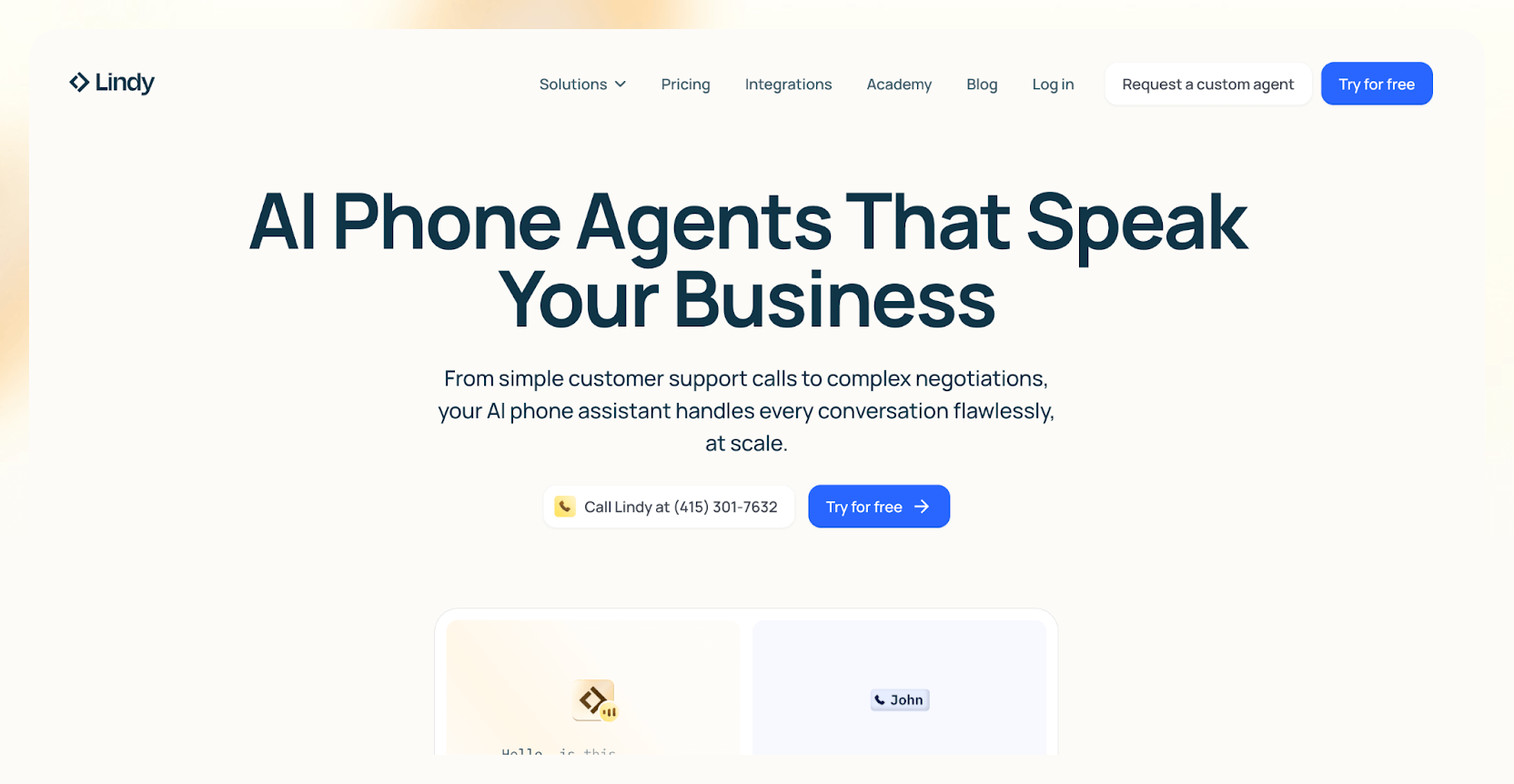
Lindy is not a simple email sequencer or a call dialer, but it’s a full-blown outbound sales AI tool that can talk, write, follow up, qualify, and report, all without human input.
Let’s say you want to follow up with 50 leads who downloaded your whitepaper last week. You just spin up a Lindy agent, feed it the list, and it’ll send a first email, wait for replies, follow up intelligently if there’s no response, and even schedule a call if someone shows interest.
If it’s a call campaign, Lindy can actually make real phone calls, talk to the lead, ask qualifying questions, and summarize the conversation in Slack or your CRM.
All of this is done through a visual, no-code builder.

You define how it should handle objections, what to do if the prospect asks for a demo, when to notify sales, and what tools to update post-call or email, whether that’s Salesforce, HubSpot, or Google Sheets.
And thanks to Lindy’s Agent Swarms, you can run dozens of these outbound workflows in parallel. One agent handles calls, another does follow-up emails, and a third enriches lead data before the outreach even begins.
Lindy feels like an actual outbound sales rep who works 24/7, never drops the ball, and follows up faster than your competitors.
Pros
- Handles cold calls, follow-ups, and email automation in one place
- Can research leads qualify prospects and summarize conversations
- Visual flow builder makes it easy to customize every part of the sequence
- Integrates with tons of apps via Pipedream and supports Salesforce, HubSpot, and Sheets out of the box
Cons
- Phone call features aren’t included in the free plan
- You’ll need to set up a paid number for calling functionality
Pricing
- Free plan: 400 tasks/month, 1M character knowledge base
- Pro ($49.99/month): 5,000 tasks/month, phone support, 20M character knowledge base
- Business ($299.99/month): 30,000 tasks/month, premium phone call automation, priority support
{{templates}}
2. Apollo.io: Best AI for Sales Prospecting
What does it do? Apollo.io is an AI-powered outbound sales platform built for serious prospecting at scale.
Who is it for? It's ideal for SDRs, sales teams, and growth-stage founders who want to automate lead research, personalize cold outreach, and prioritize high-intent prospects without juggling multiple tools.
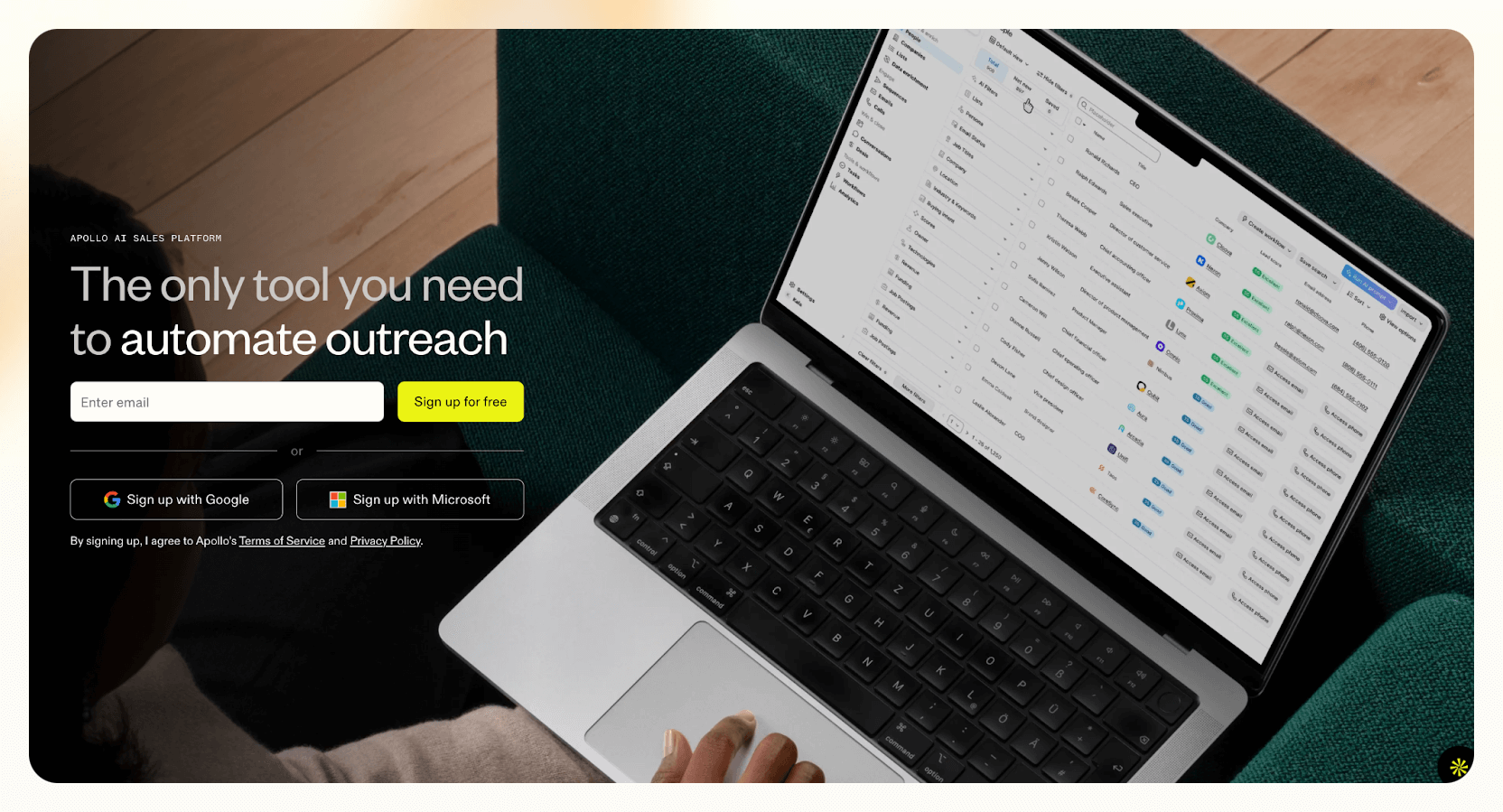
As someone closely knitted in the online marketing sector, I see many of my peers having this one tool in their stack for sales outreach, and yes, that’s Apollo. I didn’t understand its hype until I found myself using it every day to gather prospects for my business.
In my opinion, the biggest reason is how Apollo.io makes prospecting feel automatic. You can pull up leads from a 210 M+ contact database, sort by intent signals, job changes, or company insights, and fire off sequences across email, phone, and LinkedIn, complete with AI-written emails and follow-ups.
Apollo's AI Research Agent flips the script if you’re flooding in lead lists or wasting time on low-quality prospects. It automatically scores and ranks leads, schedules outreach based on real-time engagement, and even writes context-aware messages tailored to each persona.
Moreover, the built-in dialer can make, receive, and log calls without leaving the platform. In fact, with the latest updates, you can record calls, get AI-written summaries, and share clips with your team for follow-up or coaching.
And if you’re already using Salesforce or HubSpot, Apollo’s bidirectional sync means your CRM stays updated with zero manual entry. It also plays nicely with over 950 apps, so your entire outbound workflow stays in one place.
Pros
- Multichannel sequences (email, phone, LinkedIn)
- AI lead scoring, email writing, and outreach timing
- Built-in dialer with call logging, transcription, and summaries
- Deep CRM integrations and no-code automation with 950+ tools
Cons
- Data accuracy can vary slightly across industries
- Credit-based usage model can be limiting on lower tiers
- Advanced features (like AI scoring and call recording) are only available on higher plans
Pricing
- Free: 100 credits/month, 2 sequences, basic filters
- Basic ($59/user/month): 5,000 credits, advanced filters, CRM integrations, scheduling, lead enrichment
- Professional ($99/user/month): 10,000 credits, unlimited sequences, AI writing, US dialer, call recordings, 5 mailboxes
- Organization ($149/user/month): 15,000 credits, international dialer, 15 mailboxes, SSO, custom dashboards (min 3 users, annual billing only)
3. ActiveCampaign: Best AI for Email Outbound Automation
What does it do? ActiveCampaign is a customer experience automation platform that uses AI to power hyper-personalized outbound email campaigns at scale.
Who is it for? It's perfect for B2B marketers, solo founders, or sales reps who rely on email as their primary outbound channel and performance-driven AI insights.
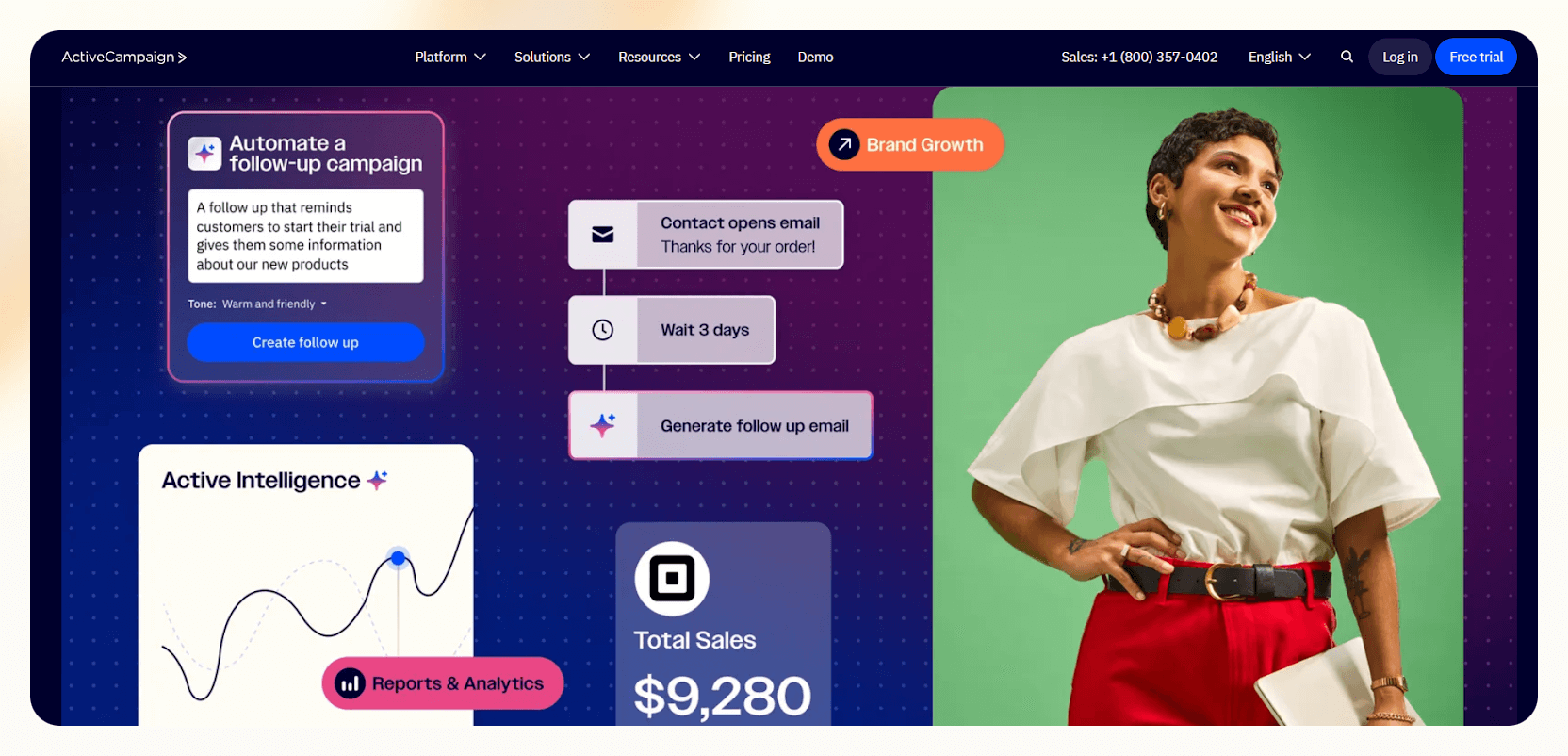
ActiveCampaign picks up the slack if your outreach is mostly email-based and you’re tired of manually tagging contacts, building automations from scratch, or guessing which sequence will convert.
I’ve used it for everything from launching cold outreach for a client’s product to reactivating stale leads in my own list, and it delivered more than just open rates. It delivered replies.
What stood out to me was the Predictive Sending feature. It automatically figures out when each person is most likely to open your email and schedules delivery accordingly. Combined with AI Subject Line Generator and Conditional Content, it almost felt like each lead was getting a version written just for them.
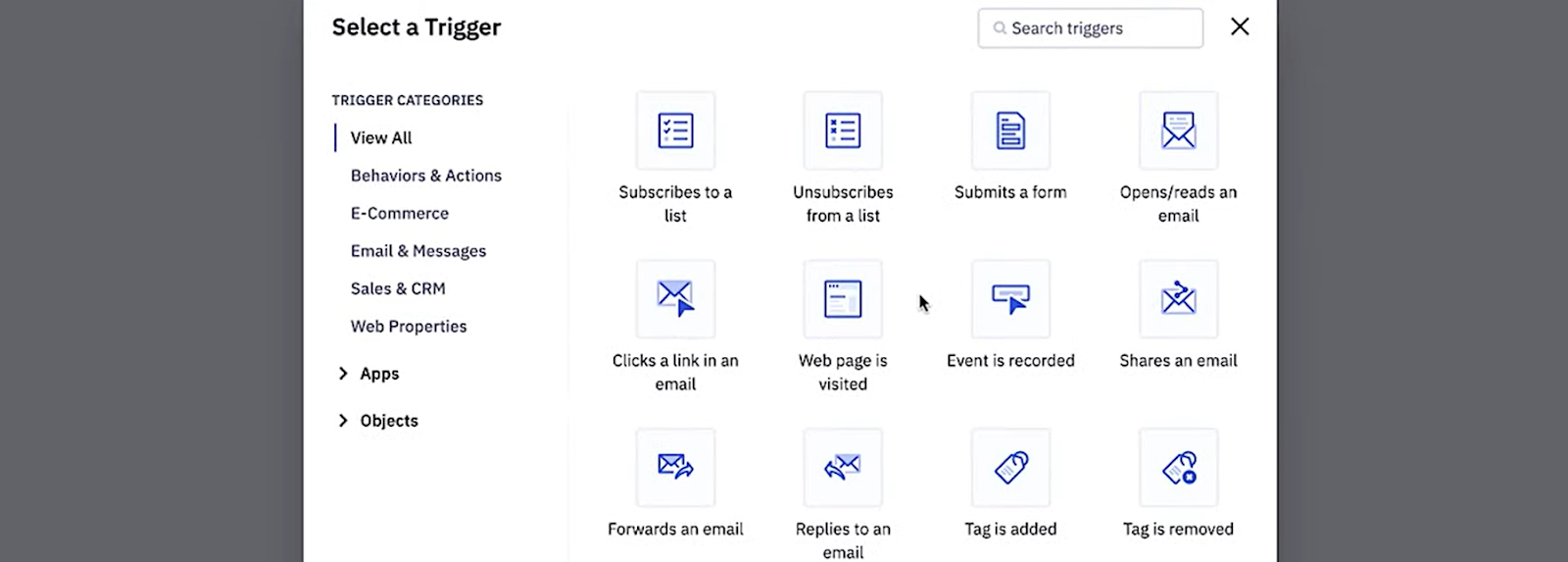
The automation builder is another highlight. You can set up branching workflows triggered by clicks, opens, replies, tags, or even site visits. For example, when a lead clicked my CTA but didn’t reply, it auto-sent a follow-up after 48 hours. I didn’t have to lift a finger.
ActiveCampaign also integrates natively with CRMs like Salesforce and Pipedrive, plus tools like Calendly and Zoom, so I didn’t have to jump between tabs or update records manually.
Pros
- Segmentation and personalization at scale
- Visual automation builder with deep logic and triggers
- Native integrations with top CRMs and scheduling tools
- AI-powered send time optimization and subject line writing
Cons
- Learning curve for advanced automations
- Pricing increases quickly with the contact list size
Pricing
- Lite ($29/month): Email marketing, automation builder, up to 1,000 contacts
- Plus ($49/month): Lead scoring, landing pages, CRM, integrations
- Professional ($149/month): Predictive sending, split automations, attribution, AI content
- Enterprise (custom): Custom reporting, unlimited users, HIPAA compliance, phone support
4. Cognism: Best AI for Lead Generation
What does it do? Cognism is a GDPR-compliant B2B lead generation platform that delivers highly accurate contact data, intent signals, and now, actionable sales intelligence with its new Sales Companion tool.
Who is it for? A strong choice for outbound sales teams, SDRs, and revenue leaders who want better data, faster prospecting, and real-time buying signals, especially if they target European markets.
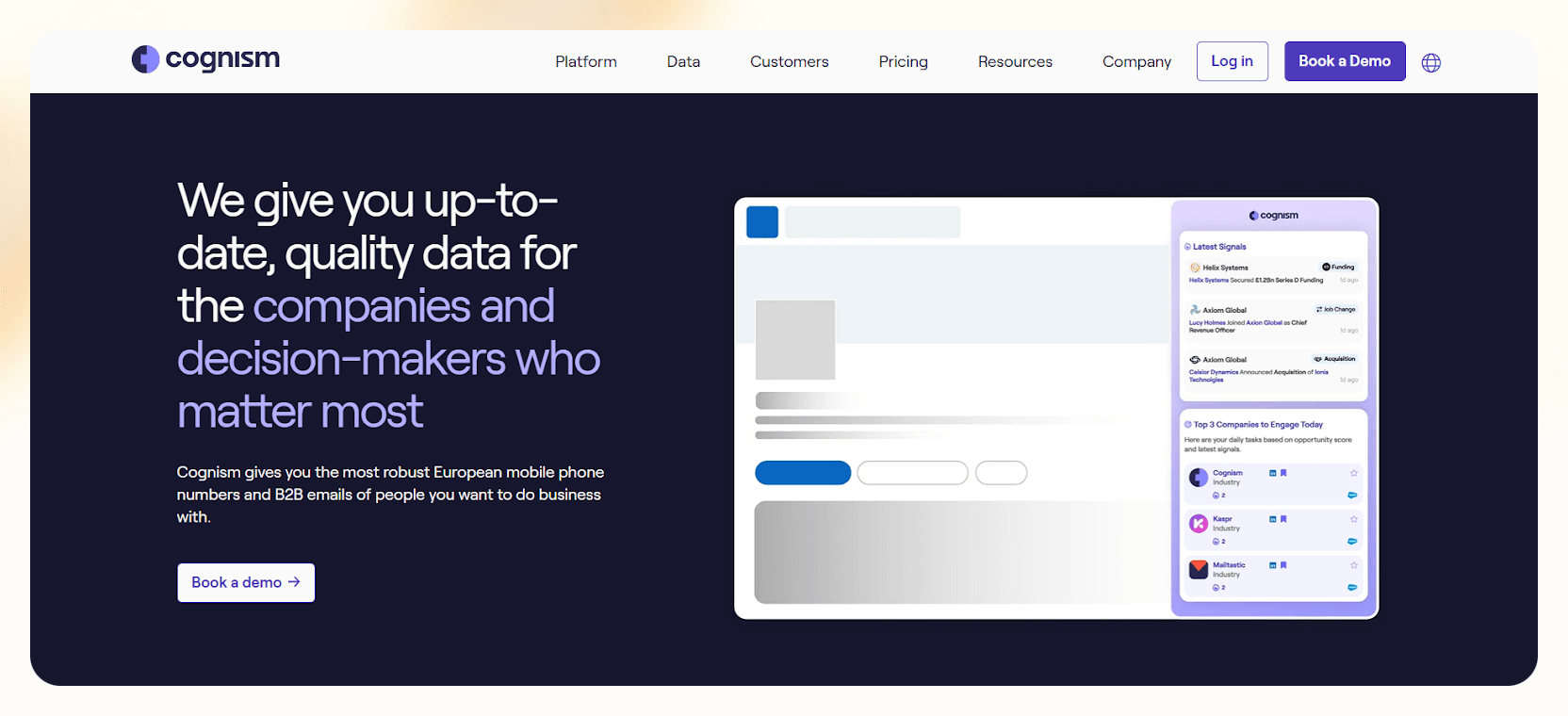
When I first used Cognism, I was sold on its phone-verified contacts. But in 2026, the platform’s new Sales Companion changes how you approach leads. Instead of just exporting lists, I could actually build tailored prospecting strategies inside the tool.
It served up daily sales signals, like funding rounds, hiring spikes, or tech stack changes, which helped me time outreach when interest was peaking.
The real power still lies in Diamond Data®. Cognism’s team manually verifies phone numbers and emails, especially for mobile numbers in the U.K. and EU.
In my tests, connection rates were easily 2x higher compared to other tools. Add Bombora-powered intent data, and you’ve got a stack that not only finds leads but tells you why they’re worth chasing, right now.
It’s also the most compliance-first platform I’ve seen. Beyond GDPR and CCPA, it even cross-checks contacts against Do Not Call lists in 13+ countries, which is huge if your sales team makes cold calls.
While it’s pricier than basic data tools, the depth, accuracy, and sales-ready insights justify the spend, especially for teams who rely on warm conversations, not just cold outreach.
Pros
- CRM integrations and CSV/API-based enrichment
- Diamond Data®: phone-verified contacts with unmatched accuracy
- Industry-leading EU mobile/email coverage with GDPR compliance
- Sales Companion: daily insights, technographics, and personalized strategies
Cons
- Pricing leans toward enterprise
- It is best suited for EMEA-focused teams
Pricing
Custom pricing only (based on seats, regions, and enrichment needs): Includes Sales Companion access, Diamond Data®, Bombora intent signals, Do Not Call filtering, and integrations with Salesforce, HubSpot, and more.
5. Salesforce Sales Cloud: Best AI Outbound Sales CRM
What does it do? Salesforce Sales Cloud is a powerful CRM platform that now includes AI agents, predictive insights, and smart automation features for managing complex outbound sales operations at scale.
Who is it for? It's perfect for large sales teams and revenue orgs that need a unified system to manage outbound prospecting, account-based selling, coaching, and pipeline health, using AI.
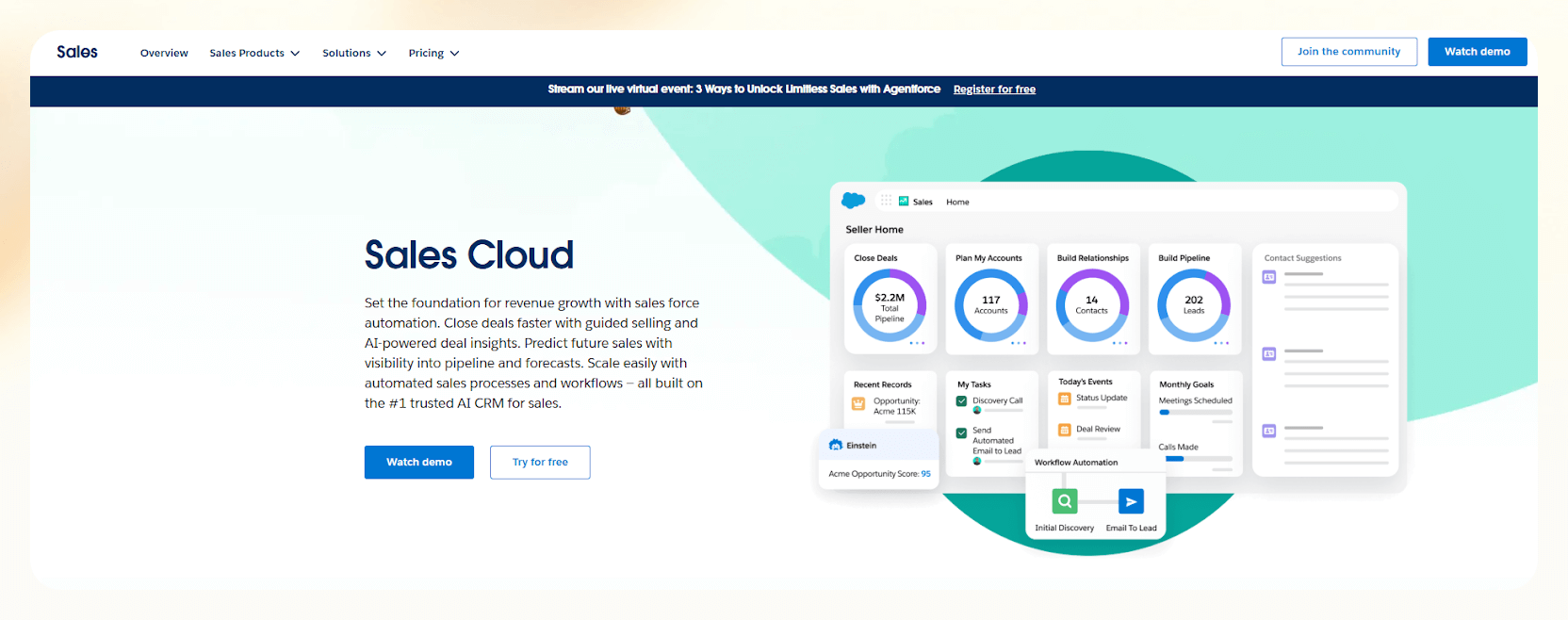
If you think of Salesforce as just a traditional CRM, it proves otherwise. I recently worked with a team that used Agentforce, Salesforce’s new AI agent suite, and it felt like adding an SDR to the team overnight.
The Agentforce SDR Agent can now engage inbound leads in real-time, answer product questions, and even schedule meetings, that too, without human intervention. Meanwhile, the Sales Coach Agent helps train reps through simulated pitch calls and objection handling, which makes onboarding smoother.
What stood out most during testing was how AI-generated call scripts and emails were customized for each account. Einstein’s engine pulled in CRM history, behavioral data, and engagement context to suggest exactly what to say and when.
I also liked how the Data Cloud surfaced external intel, like company funding rounds, right next to deal records.
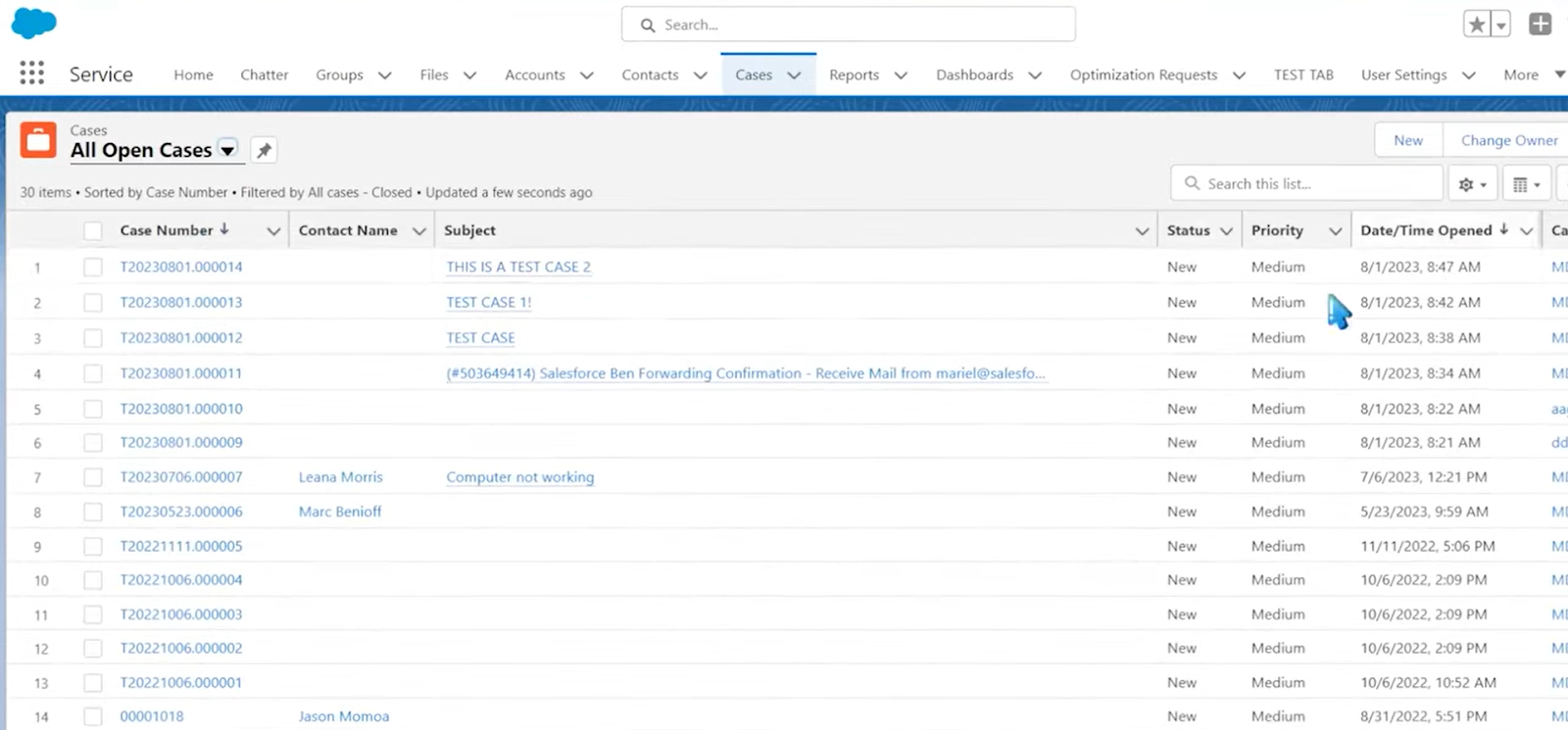
Sales teams can now plan entire account strategies with embedded SWOT tools, share insights across departments, and track performance with real-time dashboards, all without leaving Salesforce. It’s like having RevOps, sales training, and outbound all bundled into one.
Yes, it’s complex. And yes, it’s pricey. But if your team is scaling and you’re serious about outbound strategy, it’s hard to beat what Salesforce offers now.
Pros
- AI agents for inbound engagement and sales coaching
- Predictive analytics and real-time pipeline health checks
- Personalized outreach with AI-written emails and call scripts
- Embedded account planning, training, and cross-team collaboration
Cons
- Overkill for small teams or startups
- Can feel heavy for reps used to lightweight tools
Pricing
- Starter Suite ($25/user/month): Basic CRM, leads/accounts/opportunities, email integration
- Professional ($80/user/month): Full pipeline tracking, basic automations, sales engagement
- Enterprise ($165/user/month): AI lead scoring, forecasting, custom workflows
- Unlimited ($330/user/month): Agentforce AI agents, advanced analytics, training tools, 24/7 support
6. PhantomBuster: Best AI for LinkedIn Outreach
What does it do? PhantomBuster is a no-code automation platform that lets you scrape data, build outreach flows, and automate personalized LinkedIn prospecting, all powered by AI and designed with compliance in mind.
Who is it for? It's best for growth hackers, solo founders, and SDRs who rely heavily on LinkedIn and want to scale their outreach without compromising on personalization or account safety.
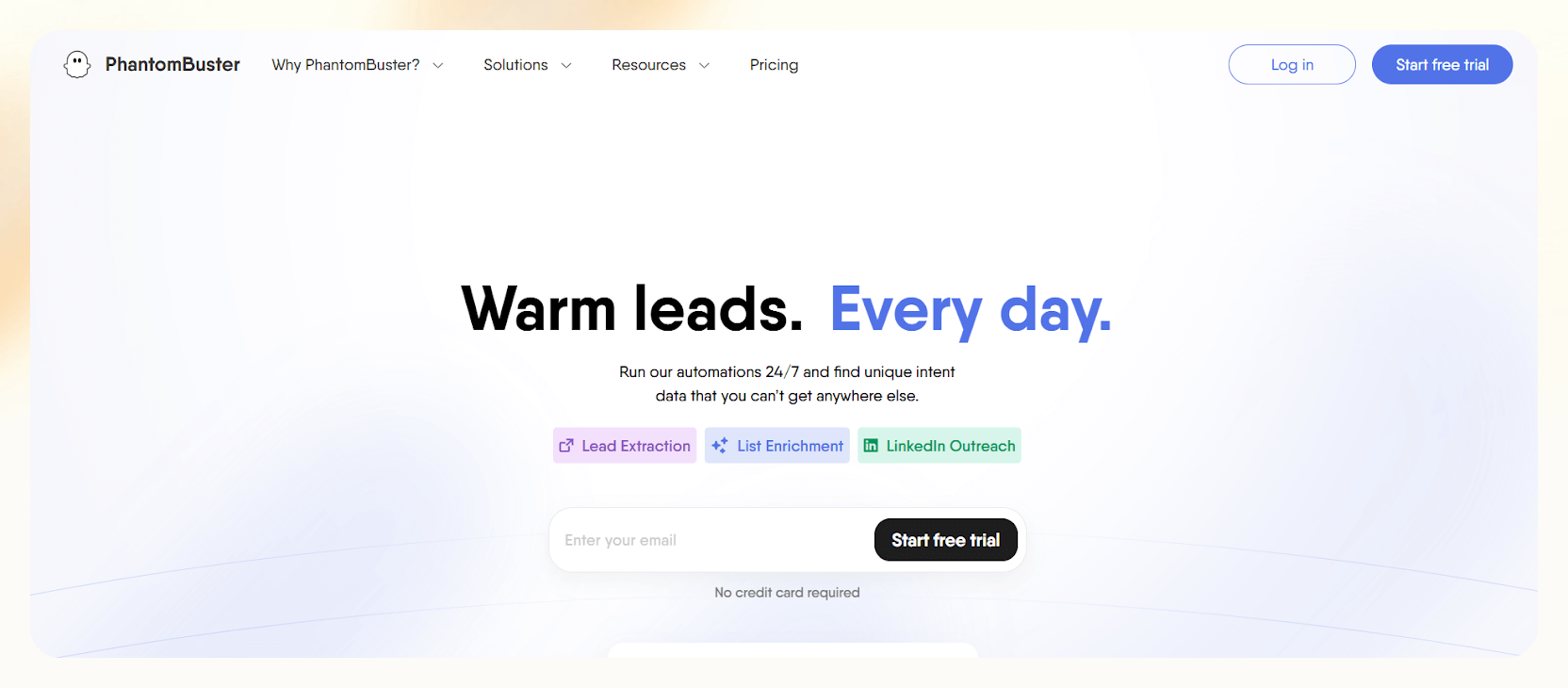
PhantomBuster has become one of my go-to tools for LinkedIn outreach, not just because it automates tasks, but because it actually makes outreach smarter.
The new Flows feature lets you create multi-step sequences: extract leads from a LinkedIn group, send personalized connection requests, and follow up, all without touching your keyboard.
Its upgraded AI personalization engine is where things click. It scans LinkedIn profiles to craft unique message variants that don’t feel templated. In my tests, these messages led to higher acceptance and response rates compared to what I’d written myself.
And since PhantomBuster regularly updates its Phantoms to stay aligned with LinkedIn’s rules, I could run campaigns confidently without worrying about account issues.
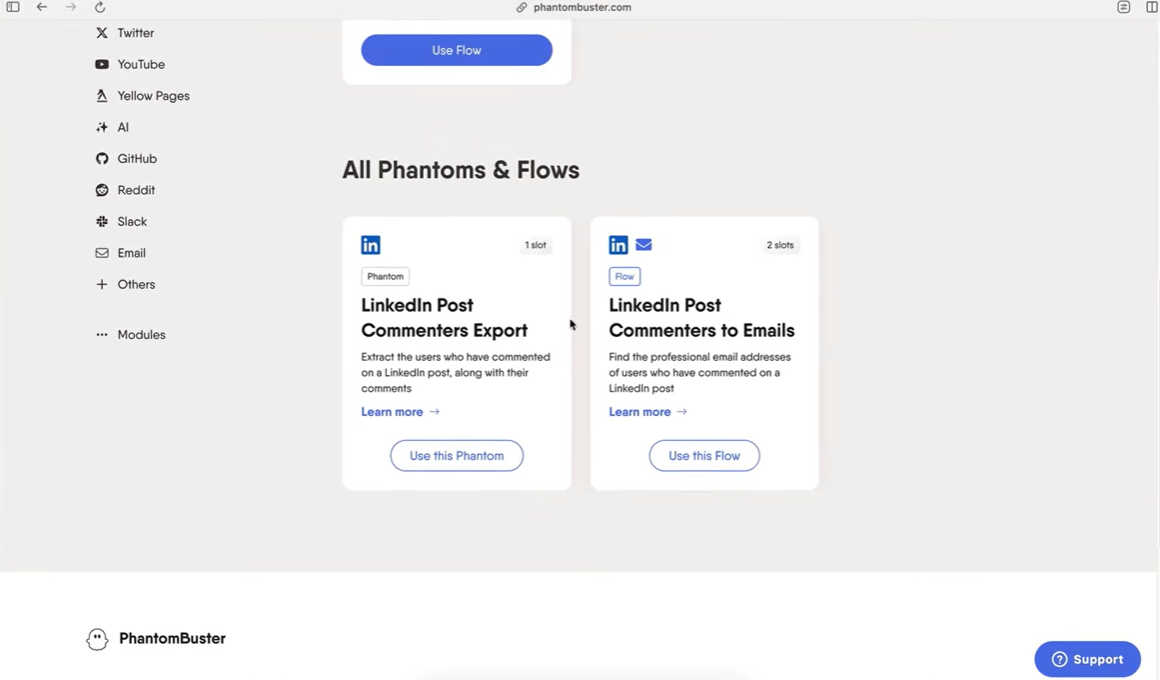
There’s also stronger CRM integration now. I synced with HubSpot, which let me track LinkedIn touches alongside email cadences. And because everything runs on PhantomBuster’s cloud servers (not my own machine), I could automate at scale while keeping my LinkedIn account safe.
PhantomBuster also supports multichannel workflows, so if I wanted to enrich a lead’s data from Instagram or Twitter, or send a follow-up email after a LinkedIn view, it could handle that too.
Pros
- Multi-step Flows automate complete outreach sequences
- AI-personalized LinkedIn messages based on profile data
- Updated regularly to adapt to LinkedIn’s algorithm and rules
- Cloud-based automation with CRM integration and multichannel reach
Cons
- Setup can be technical for first-time users
- Strict rate limits still apply due to LinkedIn policies
Pricing
- Starter ($69/month): 5 automation slots, 10K rows/month, limited Flows
- Pro ($149/month): 15 slots, 30K rows/month, advanced Flows, team workspace
- Business ($439/month): 50 slots, 100K rows/month, priority support, team management
- Custom Enterprise plans available for high-scale social selling teams
{{cta}}
How I chose the best outbound sales software
After years of testing sales platforms, I’ve learned that good outbound sales software doesn’t just send emails, it helps you build smarter pipelines, faster. Every tool I included here was chosen based on how well it handled real-world outbound automation and whether it actually improved the way I work.
Here’s what I focused on:
- Real-world performance: I used each outbound sales tool across live campaigns, building lead lists, setting up outbound email automation, and syncing data with CRMs. If a platform slowed me down or added unnecessary steps, it didn’t make the list.
- AI that drives results: There’s a difference between AI for outbound sales that just sounds good and AI that actually boosts replies or call connections. I prioritized platforms with usable AI features, like lead scoring, message personalization, AI outbound sales calls, or predictive outreach suggestions.
- Stack compatibility: The best outbound automation tools don’t demand a total system overhaul. I gave extra points to outbound sales CRMs and automation platforms that worked cleanly with Salesforce, HubSpot, or other tools in the workflow.
- Compliance and adaptability: Outbound automation should never feel risky. The tools I picked stay aligned with data regulations like GDPR, adapt to platforms like LinkedIn, and handle outreach without putting your account at risk.
- ROI and plan transparency: Some AI outbound platforms can get pricey, especially those that include advanced sales pipeline automation or multichannel outreach. I looked for tools that deliver strong value, even on lower-tier plans, and made sure to highlight when key features were gated.
Whether you’re after the best CRM for outbound sales or a lightweight AI tool for outbound email automation, every product here was tested hands-on and chosen because it can make your outreach better, not busier.
How can Lindy help you with Outbound Sales?
Lindy is built for automating outbound sales without stacking more tools or hiring extra reps. It’s not just a CRM add-on or a basic email sequencer.
- Lindy acts like a real outbound rep that writes emails, makes phone calls, qualifies leads, and updates your CRM, completely on its own.
- You can automate email outreach with personalized sequences and follow-ups, use prebuilt templates, or count on the AI agents to handle cold calls and book meetings. It even supports advanced workflows like enrichment before outreach or real-time alerts to Slack.
- If you’re curious how Lindy handles calls, check out this Outbound Calling 101 lesson to see it in action.
Try Lindy for free! Whether you're a solo founder or managing a full sales team, Lindy helps you scale outreach, not complexity.
Frequently Asked Questions
1. How can I automate outbound sales without hiring more reps?
You can scale outbound sales using tools like Lindy, which act as AI-powered sales assistants. Lindy can independently make calls, send emails, qualify leads, and update your CRM, making it a powerful outbound automation tool. Other platforms like Apollo and ActiveCampaign also support outbound sales automation by managing email campaigns, follow-ups, and contact enrichment across channels like LinkedIn.
2. What’s the difference between a CRM and an outbound automation tool?
A CRM helps manage relationships and track pipelines, while an outbound automation tool focuses on initiating contact through cold emails, AI outbound sales calls, and multichannel engagement. Some platforms, like Lindy and Salesforce Sales Cloud, combine both, making them ideal if you're looking for the best CRM for outbound sales with built-in AI sales automation.
3. Can AI actually improve outbound sales performance?
Yes, AI can significantly improve outbound sales performance. It boosts productivity by automating outreach, prioritizing leads, and optimizing timing. Tools like Lindy and Salesforce use AI for outbound sales to handle voice conversations, follow-ups, and even lead qualification. These AI tools for outbound sales help streamline sales pipeline automation and save reps hours each week.
4. What is the best outbound automation tool for LinkedIn outreach?
PhantomBuster leads here. Its Flow-based outbound automation lets you scrape lead data, send personalized connection requests, and follow up automatically. It's one of the best outbound automation tools for social sellers who rely heavily on LinkedIn and need AI-powered yet compliant workflows.
5. Which tools are best for outbound email automation?
Lindy is one of the best tools for outbound email automation. It writes and sends emails, handles follow-ups, and integrates with your CRM, all powered by AI. For more traditional outbound email automation, ActiveCampaign and Apollo offer features like predictive send times, segmentation, and multichannel sequences.
6. What features should I look for in the best outbound sales tools?
When selecting outbound sales software, prioritize tools with outbound sales AI, CRM integration, sales pipeline automation, and multi-channel support. Whether you're choosing an outbound sales CRM like Salesforce or a leaner AI outbound platform like Lindy, the best options help automate repetitive tasks while delivering smart, data-backed insights.







Blog
Related Articles
%20(1).png)
%20(1).png)
%2520(1).png)
The AI assistant that runs your work life
Lindy saves you two hours a day by proactively managing your inbox, meetings, and calendar, so you can focus on what actually matters.
