


12 Best AI Agent Builders in 2026: Tested & Reviewed


I tested all the top AI agent builders to narrow down the top 12 for 2026. Each tool fits a slightly different audience, from non-technical small teams to enterprise-level users with technical expertise.
The 12 best AI agent builders: TL;DR
Each of these tools has a different take on how agents should be built, deployed, and used in real workflows. Here’s a quick overview of the top AI agent builders:
- Lindy – Best AI agent builder for small and medium-sized businesses
- n8n – Best for open-source automation with LLM support
- Relevance AI – Best for no-code business ops automation
- SmythOS – Best for enterprise-grade orchestration
- AgentHub – Best for plug-and-play business agent templates
- LangChain – Best for dev-first agent frameworks
- AutoGPT – Best for open-ended, experimental autonomous agents
- CrewAI – Best for orchestrating collaborative multi-agent systems
- Superagent – Best for self-hosted agents with prebuilt tooling
- Flowise – Best drag-and-drop generative AI app builder
- Loveable – Best for developers building full-stack AI apps fast
- Bolt – Best browser-based AI IDE for quick app development
Next, let’s explore each tool in detail.
1. Lindy – Best AI agent builder for small and medium-sized businesses
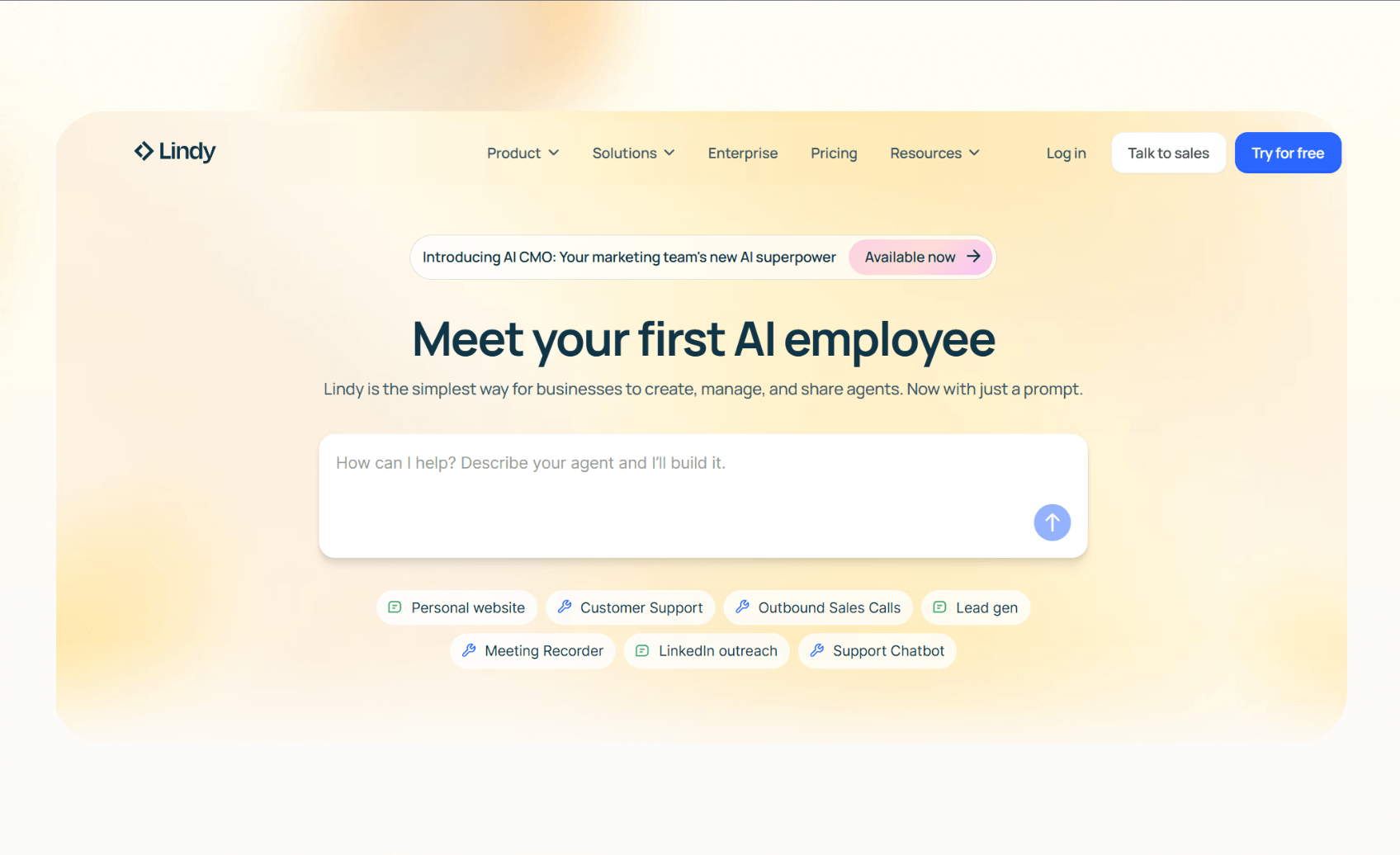
Lindy is a no-code AI agent builder that lets you create AI agents for business workflows like outbound campaigns, lead qualification, inbox triage, follow-ups, and CRM updates. These agents can understand context and work across tools like Gmail, Slack, and Salesforce.
If you're looking to create an AI agent that can handle workflows across your stack, with contextual memory and handoff built in, Lindy fits right in.
Features
- Drag-and-drop visual workflow builder to create AI agents
- Ready-to-use, customizable templates including email follow-up and sales coaching
- Knowledge base, file handling, and context awareness
- 4,000+ integrations with popular business apps like Airtable, Notion, Gmail, and more
- Handles inbound and outbound calls using realistic AI voices, works best with the latest GPT models for a natural tone
- SOC 2 and HIPAA-compliant for regulated teams
Lindy’s AI workflow builder lets you combine app actions, trigger conditions, and agent logic in a single flow.
Pros
- Works well for non-technical users like operations, sales, and marketing teams
- AI agents that integrate and work across everyday business tools
- Fast onboarding with ready-made templates
- Handles both internal and client-facing workflows well
Cons
- Not built for advanced developer-level use cases
- Might need some time to set up complex workflows
- Can’t self-host, cloud-only product
Pricing
- Free plan: Up to 40 monthly tasks
- Paid starts at $49.99/month for up to 1,500 monthly tasks
{{templates}}
2. n8n – Best for open-source automation with LLM support
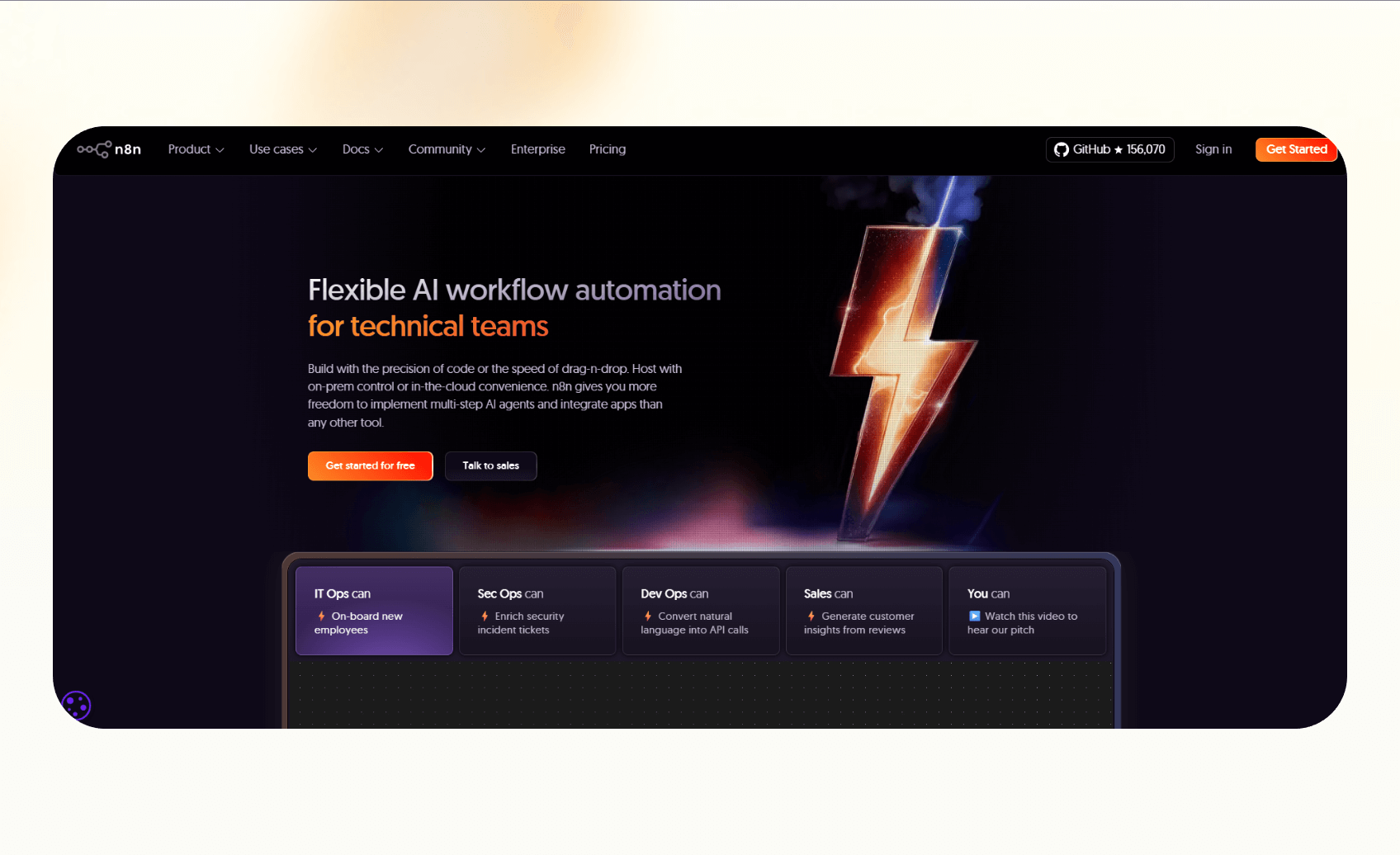
n8n is an open-source workflow automation tool with low-code customizations for technical users. It’s not an AI agent tool as such, but includes an AI Agent node, which lets users add AI into their workflows.
With custom plugins, memory nodes, and external tool connections, you can create a capable AI agent system with n8n if you're comfortable with technical setup.
Features
- Open-source, self-hostable platform
- 1000+ app integrations, including GitHub, Notion, Google Sheets
- AI nodes that support OpenAI, HuggingFace, and LangChain
- Built-in support for webhooks, triggers, and conditional logic
- Visual flow editor with JSON/code fallback for advanced control
Pros
- Developer-friendly and customizable
- Large ecosystem of prebuilt nodes and templates
- Can run fully on your infrastructure
- Good for teams already familiar with automation tools
Cons
- Workflow design can get complex fast
- Limited UI polish compared to commercial AI platforms
Pricing
- Starter plan starts at $24/month, billed monthly
- Usage-based plans scale with executions
n8n is a good option for technical users looking for an AI app builder that’s open-source, customizable, and works well with APIs, as long as you're comfortable working with webhooks and LLM nodes.
3. Relevance AI – Best for no-code business ops automation
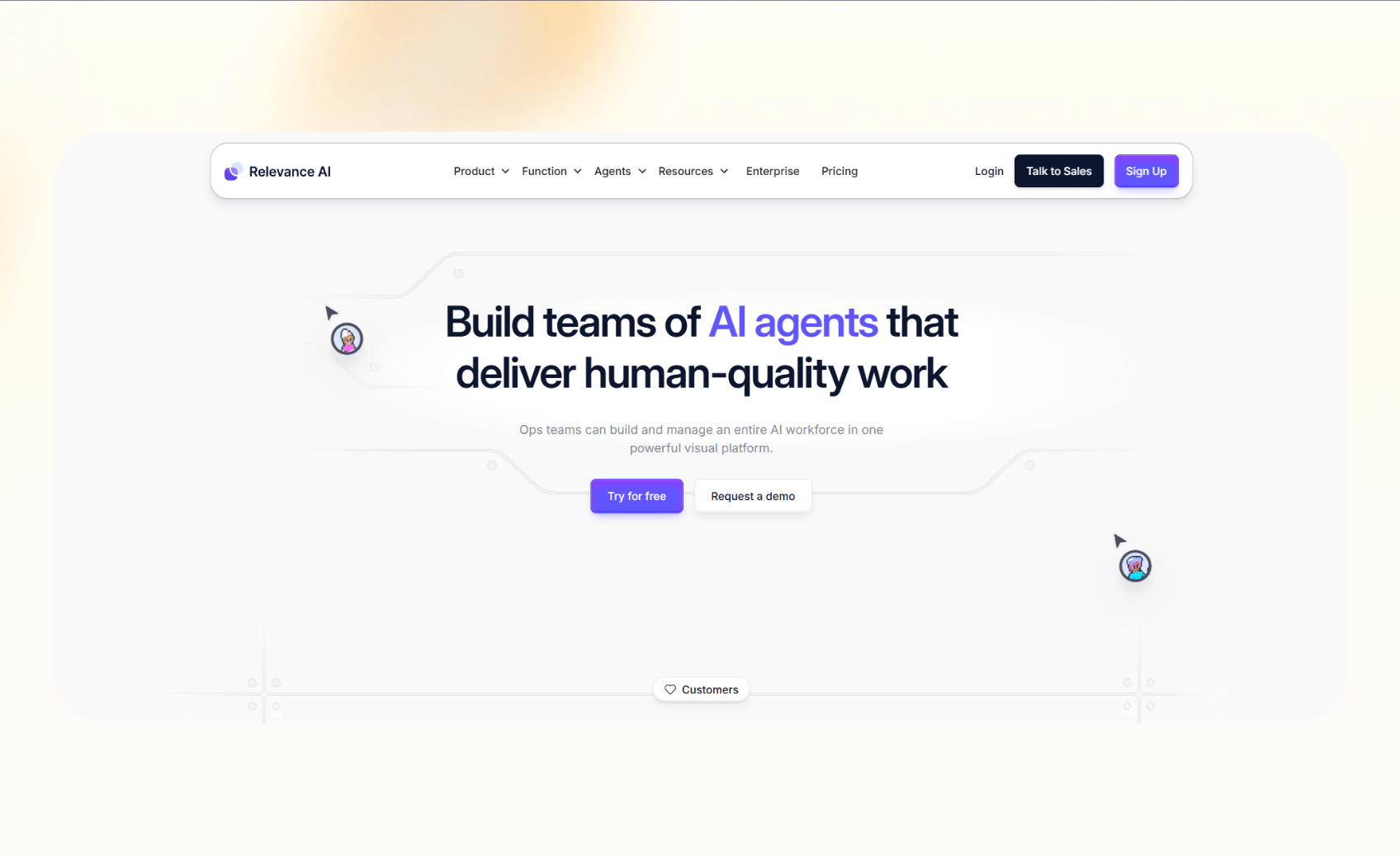
Relevance AI lets you build agents and workflows visually without writing code or prompt engineering. It’s for business teams looking to automate internal tasks like support ticket routing, lead tagging, email classification, and other repetitive ops work.
Relevance AI is a good option if you’re looking to create an AI agent for back-office work without working with different APIs or model calls. For teams new to AI agents, the learning curve is low and you get value out of it quickly.
Features
- Visual AI workflow builder with drag-and-drop interface
- Support for memory, variables, and vector databases
- Integrates with Slack, Google Workspace, HubSpot, and Notion
- SOC 2 and GDPR-compliant
- Use agents to tag, route, generate summaries, and more
Pros
- Intuitive UI for non-technical users
- Great for business ops teams
- Agent templates cover many common internal workflows
- Flexible pricing tiers, including a free plan
Cons
- Agents follow predefined paths and are less autonomous than LLM-native tools
- Not ideal for multi-step goal planning or reasoning-heavy workflows
Pricing
- Free plan with limited usage
- Paid plans start at $19/month
- Credit-based model for execution volume
4. SmythOS – Best for enterprise-grade orchestration
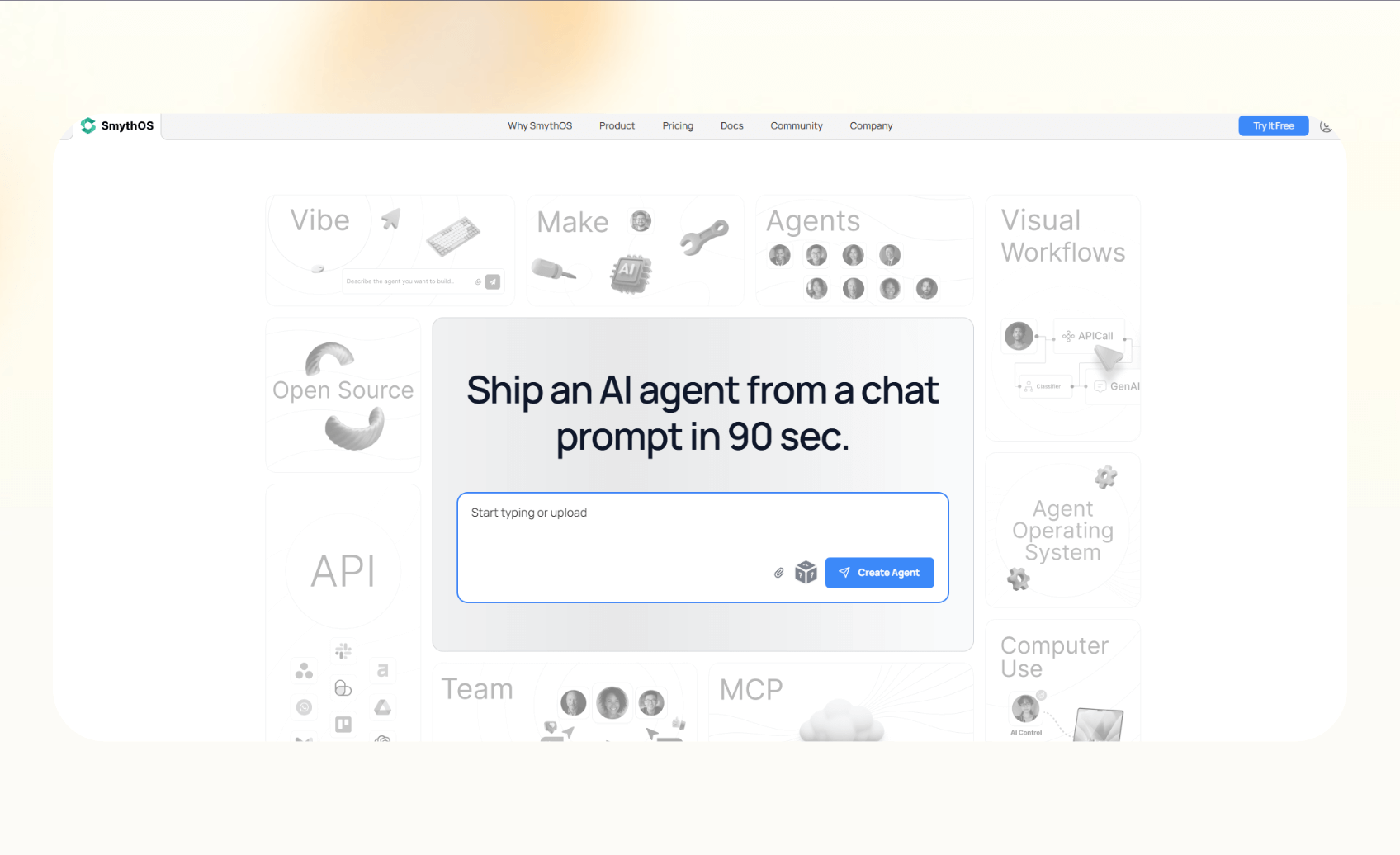
SmythOS combines a visual builder with orchestration features and gives teams complete visibility and control over how their AI agents behave, especially across multi-step workflows. It’s a strong fit for internal ops, customer workflows, or productized services where structure matters.
SmythOS is great for building reliable, repeatable flows that are structured and auditable. If you’re learning how to build an AI agent that connects tools, pulls data, and takes actions, SmythOS gives you the canvas to do it.
Features
- Drag-and-drop workflow builder with logic blocks
- Supports branching, loops, retries, and API calls
- Can scrape web content, read files, send notifications, and more
- Prebuilt templates for outbound, hiring, and knowledge tasks
- Deploy agents via HTTP or Slack
- Built-in monitoring and execution logs
Pros
- Flexible for both business and technical users
- Visual logic helps map out complex workflows
- Useful templates make it faster to deploy agents
- Good documentation and community support
Cons
- Learning curve if you're new to agent orchestration
- Not a plug-and-play solution and requires some setup
- Less tone customization or memory logic than LLM-native tools
Pricing
- A free tier with $5 in credits
- Paid starts at $39/seat/month
- Pricing scales by number of API calls and features
5. AgentHub – Best for plug-and-play business agent templates

AgentHub offers a library of prebuilt AI agents that you can customize and deploy with minimal setup. With agents for cold outreach, resume screening, and admin tasks, you can easily add AI into your business without needing to start from scratch.
For teams that prioritize plug-and-play simplicity over customization, AgentHub is worth considering. You can launch it quickly and get a usable agent live in minutes without any complex setup.
Features
- Agent marketplace with templates for hiring, outbound, admin, and more
- Sandbox environment to test and tweak agents before going live
- Built-in integrations with email, CRM, and databases
- Simple UI to map out logic and outputs
- Drag-and-drop customization of agent inputs, goals, and actions
Pros
- Fastest path to a working agent
- Good for teams without technical resources
- Covers common SMB use cases well
Cons
- Templates may not fit niche use cases
- Limited flexibility for complex logic or reasoning tasks
- Agents don’t offer deep memory or tone customization
Pricing
- Paid plans start at $295/month
- No free plan currently listed
- Additional $295 one-time setup fee
6. LangChain – Best for dev-first agent frameworks with custom control
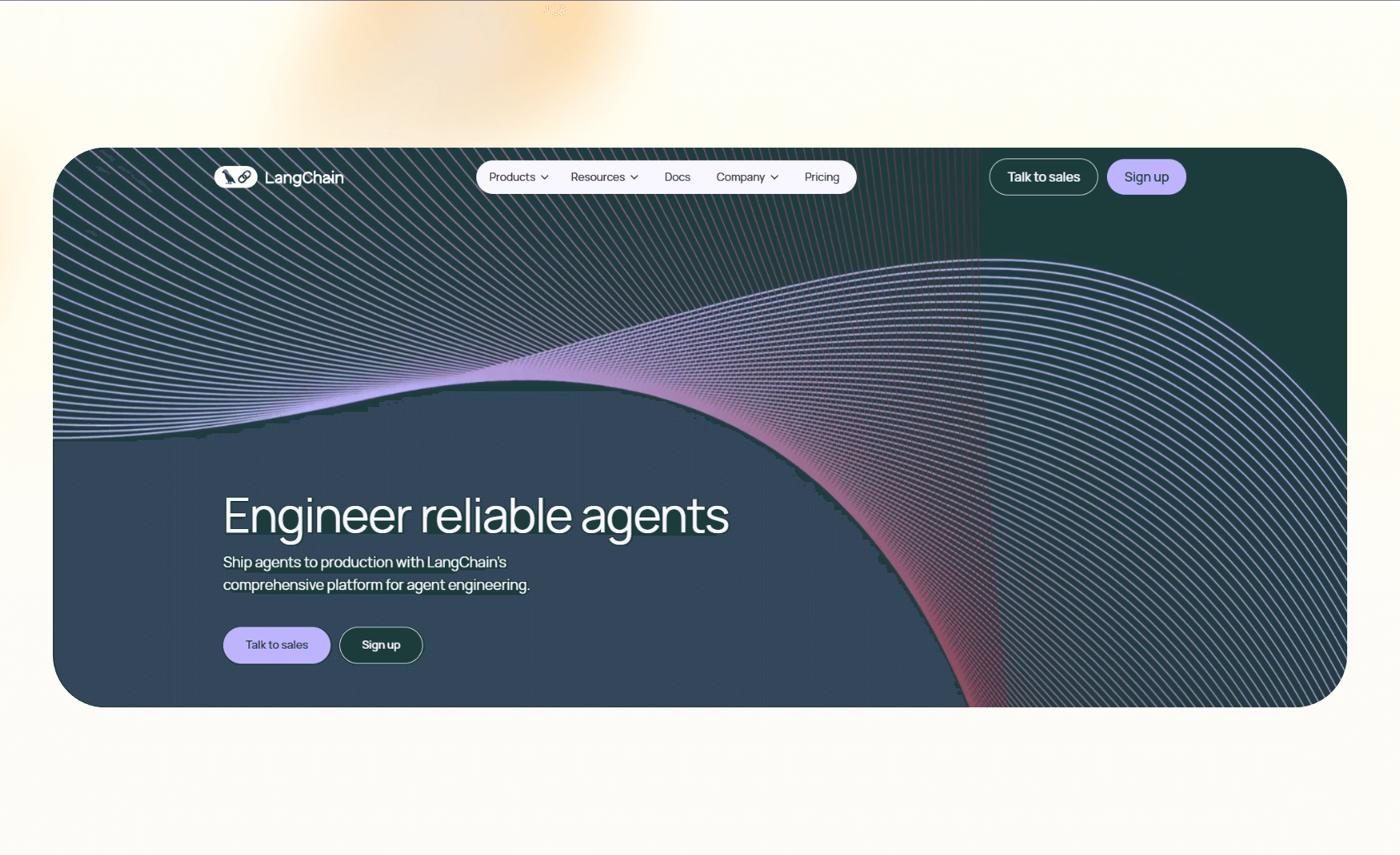
LangChain is a developer framework for building AI agents from scratch. It’s basically a Python and JavaScript library that gives you complete control over how your agent thinks, plans, remembers, and interacts with tools.
LangChain is powerful, but not plug-and-play. It’s ideal if you’re building inference workflows, multi-agent systems, or gen AI app builders from scratch, with complete control over every layer.
Features
- Support for chains, tools, memory, and agents
- Works with OpenAI, Anthropic, Cohere, and more
- Pluggable memory, buffer, summary, vector DB
- Integrates with LangServe, LangGraph, and Retrieval tools
- An active open-source ecosystem with tons of extensions
Pros
- Fully customizable
- Community support and growing plugin ecosystem
- Great for advanced use cases like research, summarization, and autonomous tasks
Cons
- Steep learning curve
- Requires Python or JavaScript knowledge
- No built-in UI, you need to set it up and test manually
Pricing
- Free and open source
- Requires your infrastructure and LLM API keys
7. AutoGPT – Best for open-ended, experimental autonomous agents
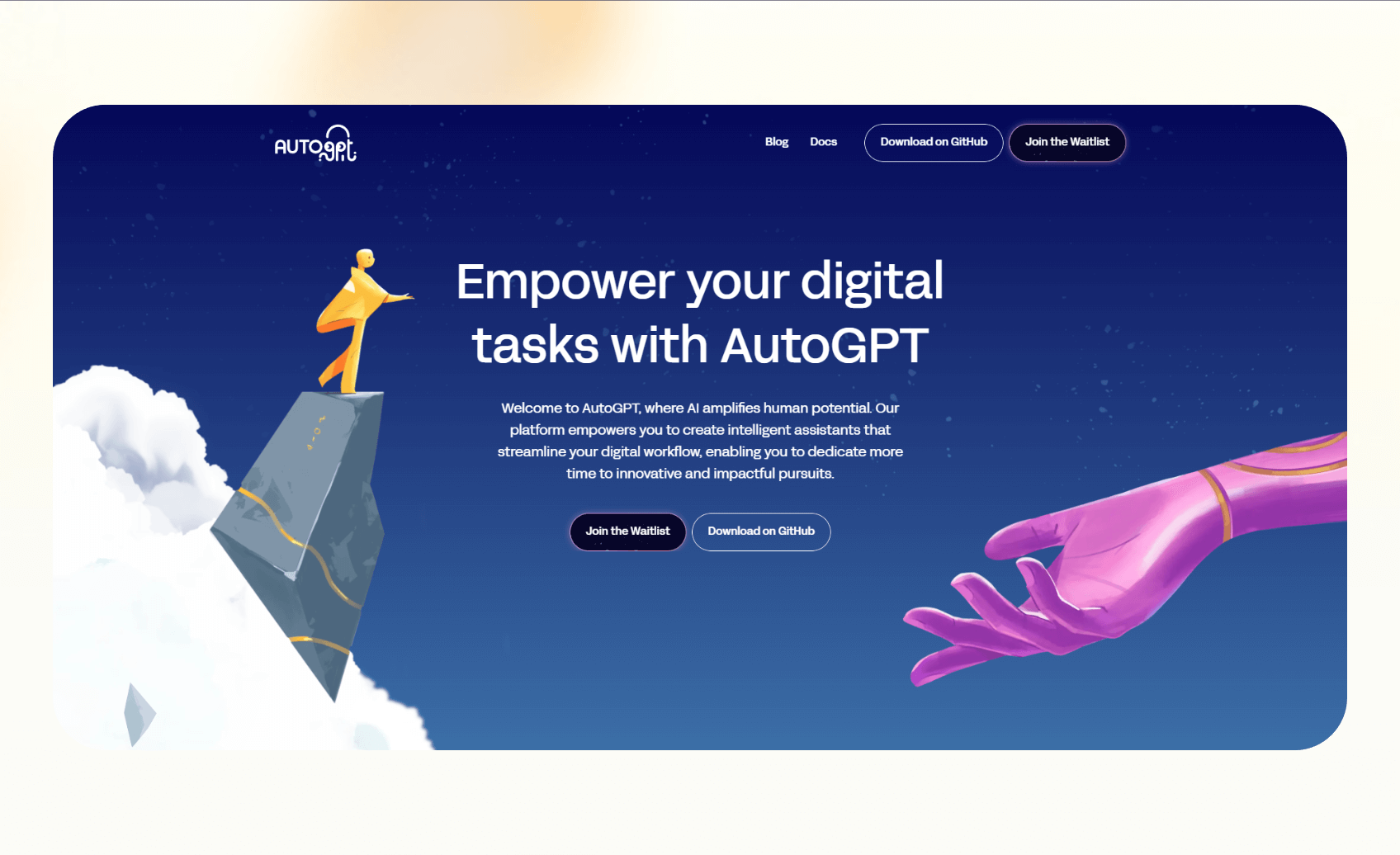
AutoGPT is an open-source Python project that lets you create an agent and give it a goal. The agent then breaks that goal into subtasks, chooses tools, and attempts to complete it with minimal human input.
It doesn’t suit business use, though. It’s a research playground, ideal if you're exploring how to build an AI agent that can plan and act recursively.
Features
- Recursive goal-to-task planning
- Built-in memory and self-reflection loops
- Plugin ecosystem for browser, file, and API tools
- Command line interface (CLI) based setup
- Runs locally with Python and OpenAI API)
Pros
- Great for experimentation and learning
- Can simulate autonomous reasoning
- Massive open-source community
- Highly customizable for devs
Cons
- Not for real-world workflows
- High risk of hallucinations or infinite loops
- Needs setup, hosting, and monitoring
- No UI or business integrations
Pricing
- Free and open-source
- Must pay for LLM API usage –– OpenAI, Anthropic, or any other model
- Explore on GitHub
8. CrewAI – Best for orchestrating collaborative multi-agent systems
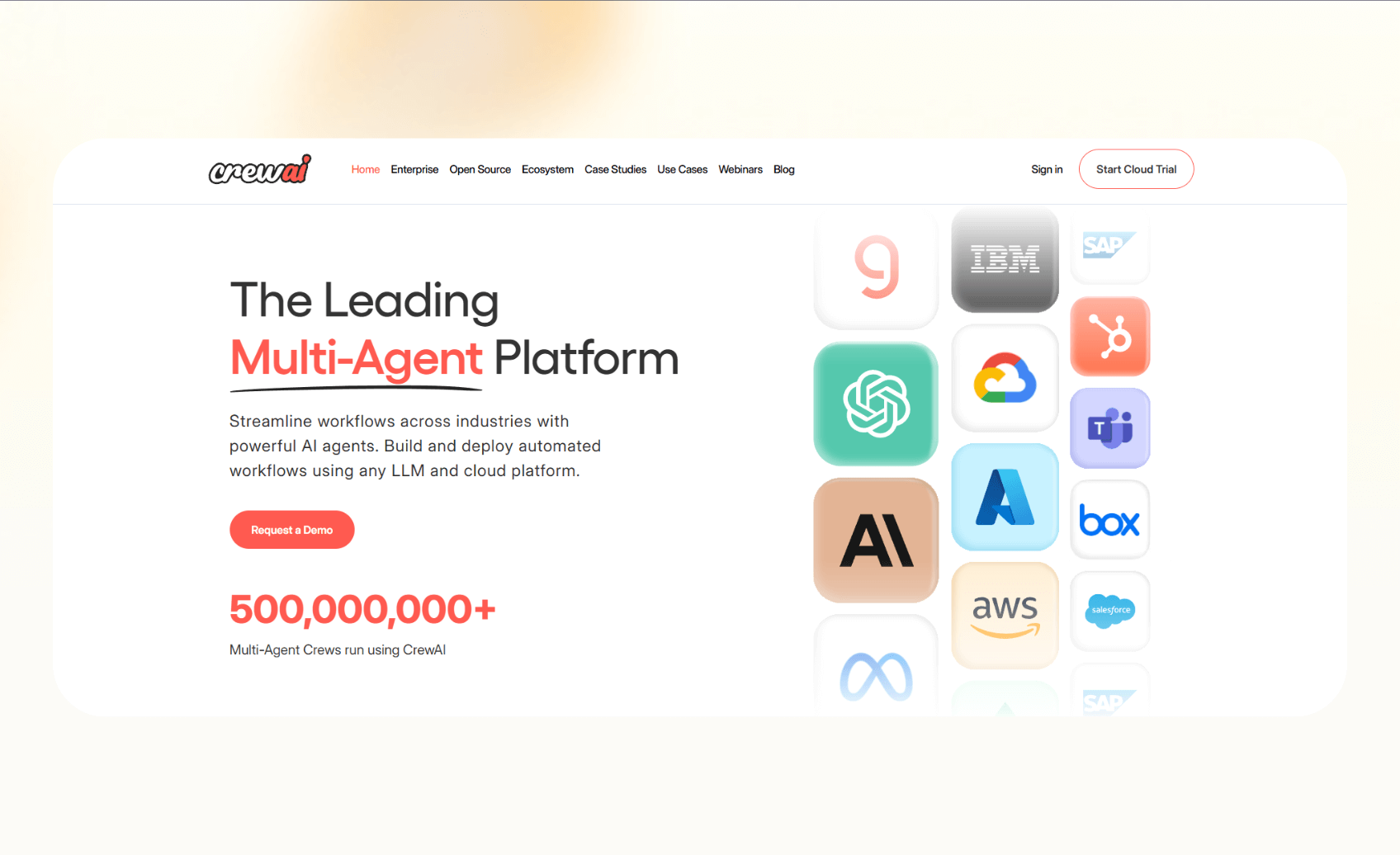
CrewAI is an open-source framework that lets you define “crews” of agents, each with a specific role and responsibility. Instead of a single agent doing everything, you can assign tasks across a team of agents, like researcher, writer, planner, and executor, and have them collaborate for a goal.
It’s a useful tool if you're experimenting with role-based delegation or building a custom AI agent builder for more structured multi-step projects.
CrewAI lets you create agents that collaborate and work as a team. It’s more abstract than most platforms, but powerful once you get the hang of it.
Features
- Define multiple agents with roles, goals, and tool access
- Assign tasks and dependencies between agents
- Use with OpenAI, LangChain, or custom toolkits
- Supports memory sharing and communication between agents
- Python-based, works locally or on the cloud
Pros
- Strong framework for multi-agent thinking
- Makes complex workflows easier to design
- Lightweight and fast to prototype
- Open-source with active development
Cons
- Requires programming knowledge
- Not designed for non-technical users
- Still evolving, documentation and stability may vary
Pricing
- Free, open-source under MIT license
- Requires external APIs like OpenAI, Anthropic, or any other LLM model
- Paid plans start at $99/month for features like a no-code builder and advanced monitoring
9. Superagent – Best for self-hosted agents with prebuilt tooling

Superagent lets you host and deploy AI agents using a mix of SDKs, APIs, and a hosted dashboard. It bridges the gap between developer-only frameworks like LangChain and fully managed tools by offering prebuilt integrations and cloud deployment options.
If you’re building a custom tool or need to run agents on your infrastructure, Superagent is more structured than a DIY stack while giving you enough control.
There isn’t much information on the home page or on the blogs, so we recommend you check it out on its GitHub page.
Features
- Agent creation via API, dashboard, or SDK
- Prebuilt integrations with OpenAI, Pinecone, Supabase, etc.
- Offers storage, logging, scheduling, and memory out of the box
- Works with LangChain, LlamaIndex, and RAG pipelines
- Cloud-hosted or self-hosted
Pros
- Developer-first, but less heavy than building from scratch
- Offers observability and monitoring
- Good fit for shipping internal AI tools
- Fast to deploy if you're already using cloud infrastructure
Cons
- Requires technical setup and configuration
- Need to join a waitlist to try it
- Strictly for technical teams
Pricing
- Free and open-source
- Paid tiers not listed publicly
10. Flowise – Best drag-and-drop agent builder using LLM chains
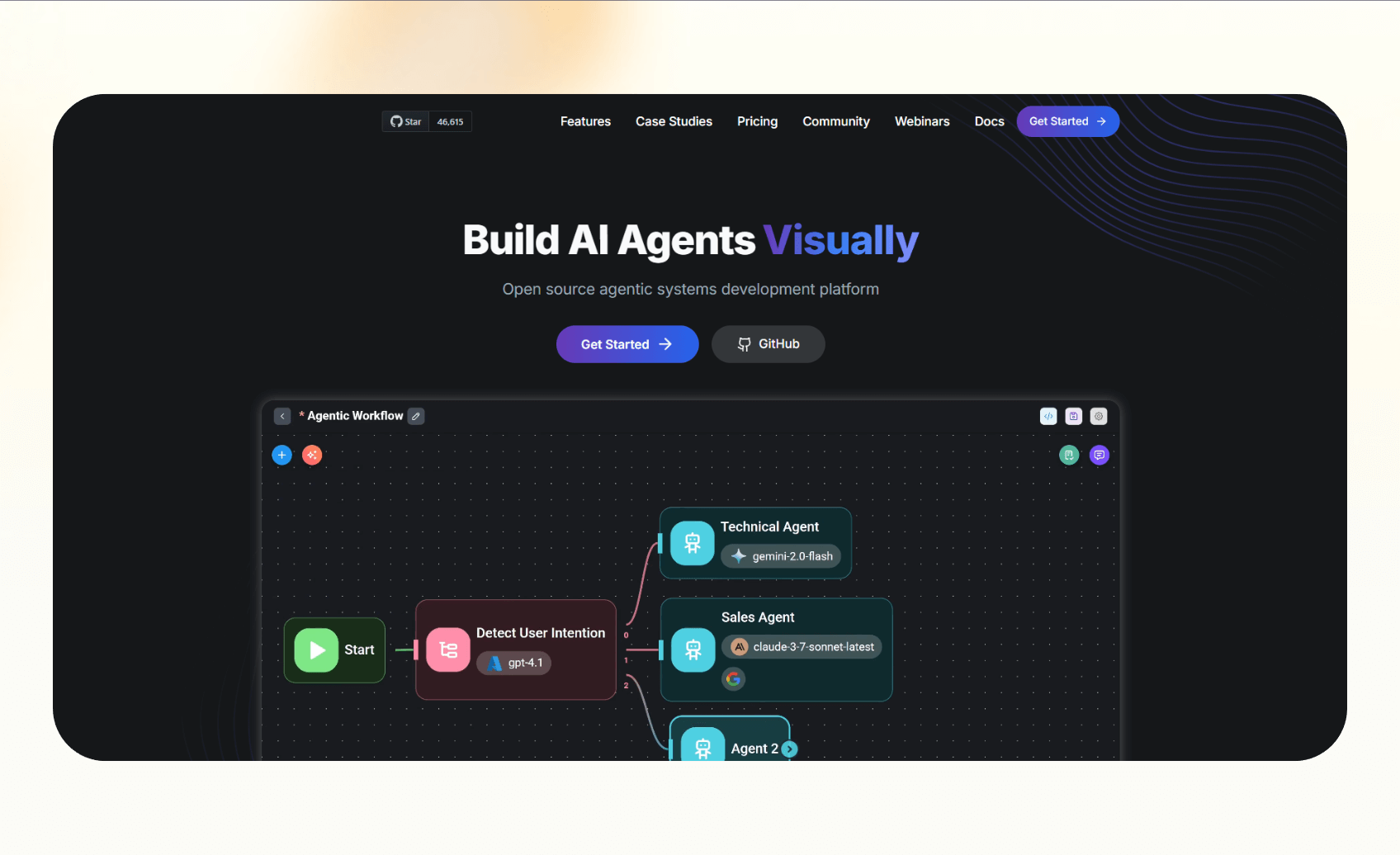
Flowise is an open-source AI agent framework that helps you prototype custom agents quickly. It offers a visual, node-based interface where you can connect prompts, tools, APIs, and memory modules without writing code. Early-stage builders and technical teams prefer Flowise for the control and customizations it offers.
Features
- Drag-and-drop interface for chaining tools and memory
- Built on LangChain and supports OpenAI, Pinecone, Weaviate, and more
- Connects to APIs, webhooks, and external services
- Can be deployed locally or in the cloud
- Export workflows as APIs or embed them into other tools
Pros
- Fast and easy to prototype complex agents
- Great for technical founders or AI teams
- Self-hostable and open-source
- Can be extended with custom nodes
Cons
- UI can get messy with larger workflows
- Not ideal for business users or teams without technical resources
- Requires LangChain knowledge to fully benefit from the advanced features
Pricing
- Starts free with 100 predictions/month
- Paid versions start from $35/month
If you're searching for an AI builder that's visual-first and LLM-native, Flowise is worth a look.
11. Loveable – Best AI agent builder for developers building full-stack AI apps fast
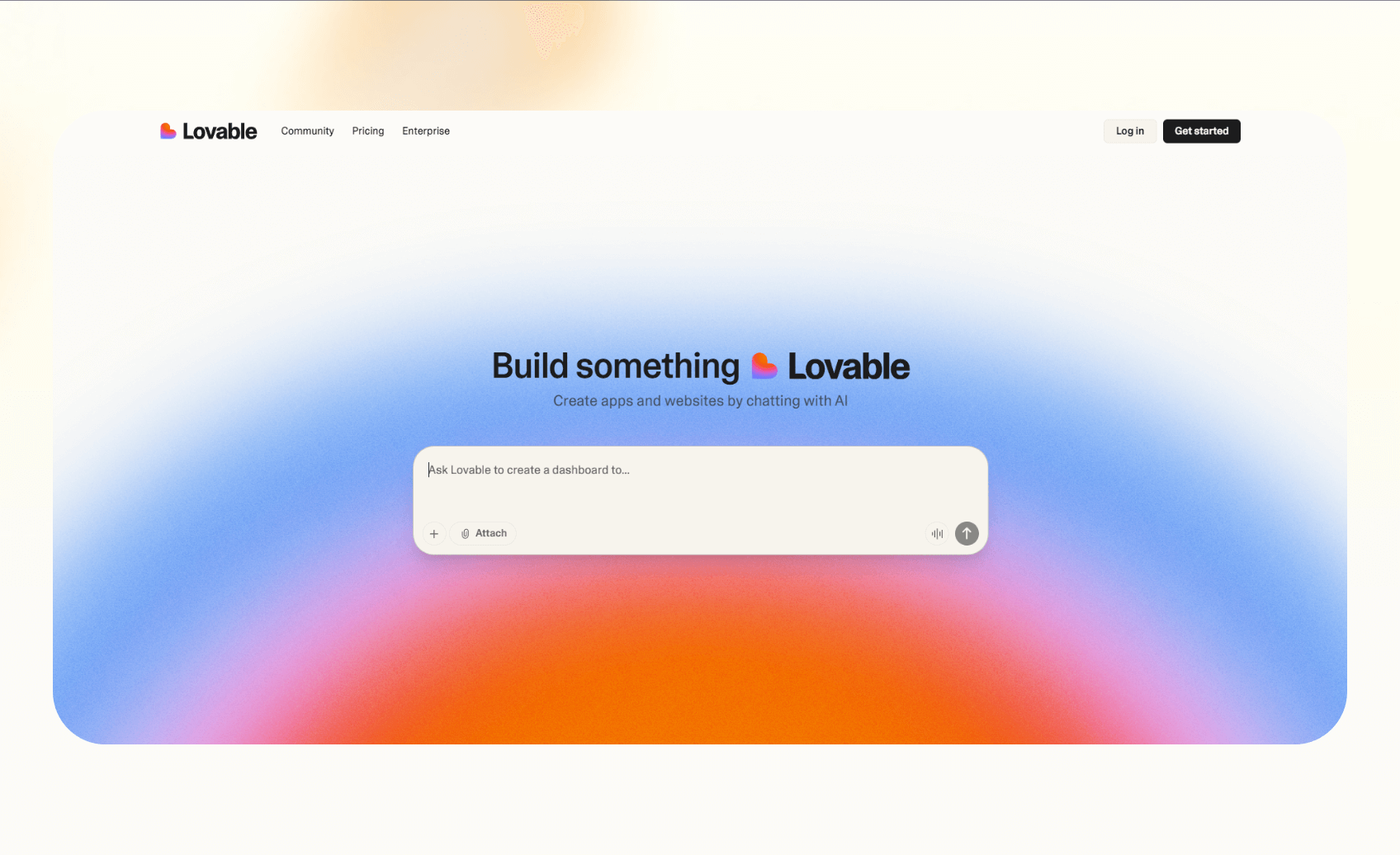
Loveable helps developer teams create AI applications and agents directly from code. It lets engineers move from prototype to production without managing heavy infrastructure or complex prompts.
Loveable combines a visual agent editor with a full-stack developer workflow, so you can plug in APIs, manage logic, and test in minutes. It’s ideal for teams looking to rapidly ship AI-powered tools, chat interfaces, or backend logic using modern frameworks.
Features
- Full-stack framework for building AI apps and agents
- Integrations with OpenAI, Anthropic, and custom APIs
- Built-in deployment, hosting, and version control
- Collaborative workspace for dev teams
- SDKs for TypeScript and Python
- Visual editor to test prompts and conversation flows
Pros
- Coding flexibility for developers
- Fast iteration from concept to deployment
- Strong GitHub integration and CLI support
- Active open-source community
Cons
- Requires technical knowledge and skills
- Some enterprise integrations require manual setup
- Limited ready-to-use agent templates compared to no-code tools
Pricing
- Free tier available
- Paid plans start at $25/month, billed monthly
12. Bolt – Best browser-based AI IDE for shipping full-stack apps fast
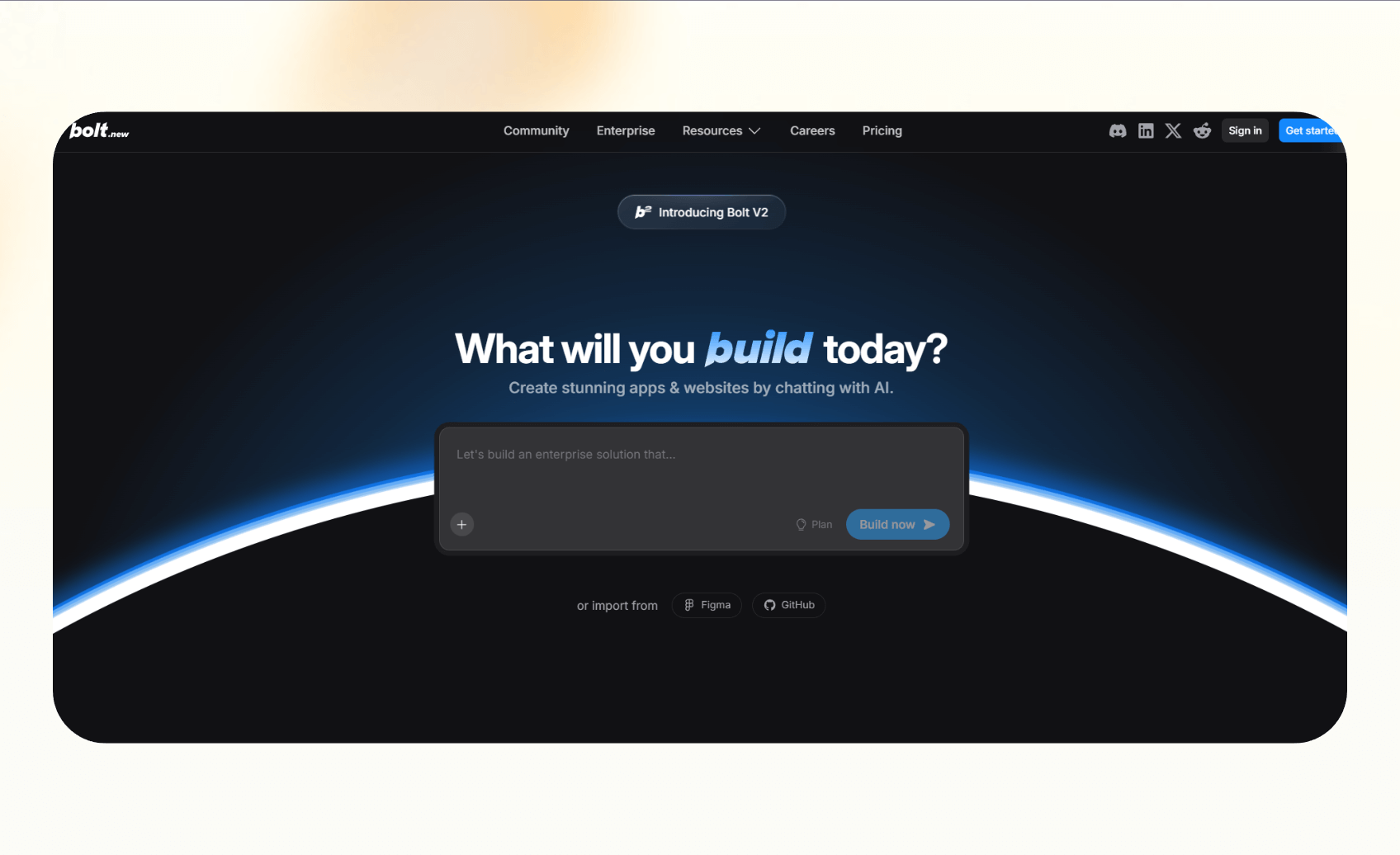
Bolt is a code-first, in-browser environment that lets you prompt, run, edit, and deploy full-stack apps without local setup. It combines a chat-style agent with a familiar editor, so developers can move from idea to a running project in minutes.
Recent updates add hosting, serverless functions, auth, domains, databases, and more to keep projects in one place.
Features
- AI agent that scaffolds and edits full-stack apps directly in the browser
- Instant run and preview, with deployment from the same workspace
- Built-in platform services like hosting, domains, serverless functions, auth, payments, analytics, and database options
- Works with modern web frameworks and NPM packages
- Token-based plans with a free tier and paid options for higher usage
Pros
- Fast path from prompt to a live prototype, no local setup required
- Code-first control that suits engineers who want to extend or fine-tune output
- End-to-end workflow in one place, thanks to built-in hosting and services
Cons
- Token limits can throttle large projects unless you upgrade.
- Not ideal for no-code teams that prefer visual building
- Some integrations may require manual setup compared to no-code suites
Pricing
- Free plan available
- Paid plans start from $25/month, billed monthly
Top AI agent builders: At a glance
The table helps you quickly decide the best tool for your workflows, whether you’re building internal ops agents or experimenting with multi-agent systems. Here’s how each tool compares:
How I tested the best AI agent builders
I evaluated each platform for the capabilities most operators or builders would want in their AI agent tool. Here’s what I checked in these AI agent builders:
- Can it handle goal-based, multi-step tasks without needing a human in the loop for every step?
- Does it support memory, context, and tool usage, and not just one-off prompts?
- Can it maintain a human-level tone and consistency, especially in client-facing roles?
- Will it scale without breaking or needing to be rewritten every time the use case changes?
Testing criteria
I tested how well the tool nailed the basics. Here’s the criteria I used:
- Ease of setup: How long does it take to build a usable agent? Does it offer templates? Support docs? A UI you’d want to use?
- Reliability across tasks: Can the agent handle edge cases without failing silently or hallucinating responses? Does it recover gracefully?
- Integration with real tools: Does it play well with CRMs, inboxes, calendars, and other systems where the real work happens?
- Customization (with or without code): Can I edit logic, reroute steps, or add fallback conditions without rewriting the whole thing?
A tool like Lindy with a visual AI workflow builder makes it easy to deploy agents that work across apps. On the other hand, something like LangChain gives you the canvas to build it, but you need to have the knowledge and expertise to do it yourself.
What is an AI agent builder?
An AI agent builder is a tool or framework for creating software agents that use artificial intelligence. These agents can reason, remember, and take action without human oversight or needing to program every step manually.
If you’ve ever wished you had an assistant that could just handle the tasks like replying to leads, scheduling calls, and triaging emails, you can now do that with AI agents.
They’ll work on the workflow you configure, integrate with tools, ask follow-up questions if needed, and loop you in when they complete the job or if they’re stuck. The more they work, the better you understand their workflow. That helps you fine-tune it.
Common use cases
Teams already use AI agents across ops, sales, and support teams. They can help you with tasks like:
- Lead routing and meeting scheduling
- Inbox triage and drafting replies
- CRM updates and data entry
- Internal reporting and summaries
- Document parsing and info extraction
- Research and contextual recommendations
Some platforms like Lindy or Relevance AI combine memory, integrations, and business context out of the box. Others, like LangChain or AutoGPT, give you more flexibility but require developer time.
{{cta}}
AI agent builders vs workflow automation tools
Workflow automation tools follow fixed triggers and actions, while AI agent builders let you define a goal for the AI to achieve.
With rule-based automation, you set up a rule. For example, when a user submits a form, add it to a sheet. The system runs that rule over and over. It’s reliable, but not flexible.
But with AI agent builders, you create an AI agent and configure its workflow in advance based on the end goal. You give the agent a goal, and using memory, logic, and tool integrations, it’ll complete the task.
A lot of people confuse AI agents with traditional automation. Both save time, but they function differently and suit different use cases.
Comparing AI agent builders with workflow automation tools
Workflow automation tools are limited in capabilities and hit a roadblock when it comes to complex workflows that demand action based on the situation. Here’s how they differ:








Blog
Related Articles
%20(1).png)
%20(1).png)
.png)

.png)
.png)
%20(1).png)

The AI assistant that runs your work life
Lindy saves you two hours a day by proactively managing your inbox, meetings, and calendar, so you can focus on what actually matters.
